I was going through old journals when I found it.
I had decided to let go of about 15 journals I had filled over the years. Somewhere inside them was a section where an earlier version of me had been trying to name my philosophy on life. I had written that part of my work was about returning to our truest nature, returning to who we are as animals.
I had just recorded a Living Letter about why modern life can feel so stressful. Then I found these old words and realized that this question had been living in me for years: How do we regulate the nervous system when the life around us keeps pulling us away from our own rhythms?
I do not believe there is one routine that will regulate every nervous system. Bodies have different histories, abilities, responsibilities, cultures, and needs. But I do believe our daily conditions matter. The way we move, rest, eat, connect, and meet the natural world can either give us more capacity or ask us to keep overriding ourselves.
A philosophy waiting in my old journals
I mentioned several teachers in the first Living Letter. Their work has helped shape how I understand stress and the body. But my greatest teacher has been my own life experience, just as your life experience may be one of your greatest teachers.
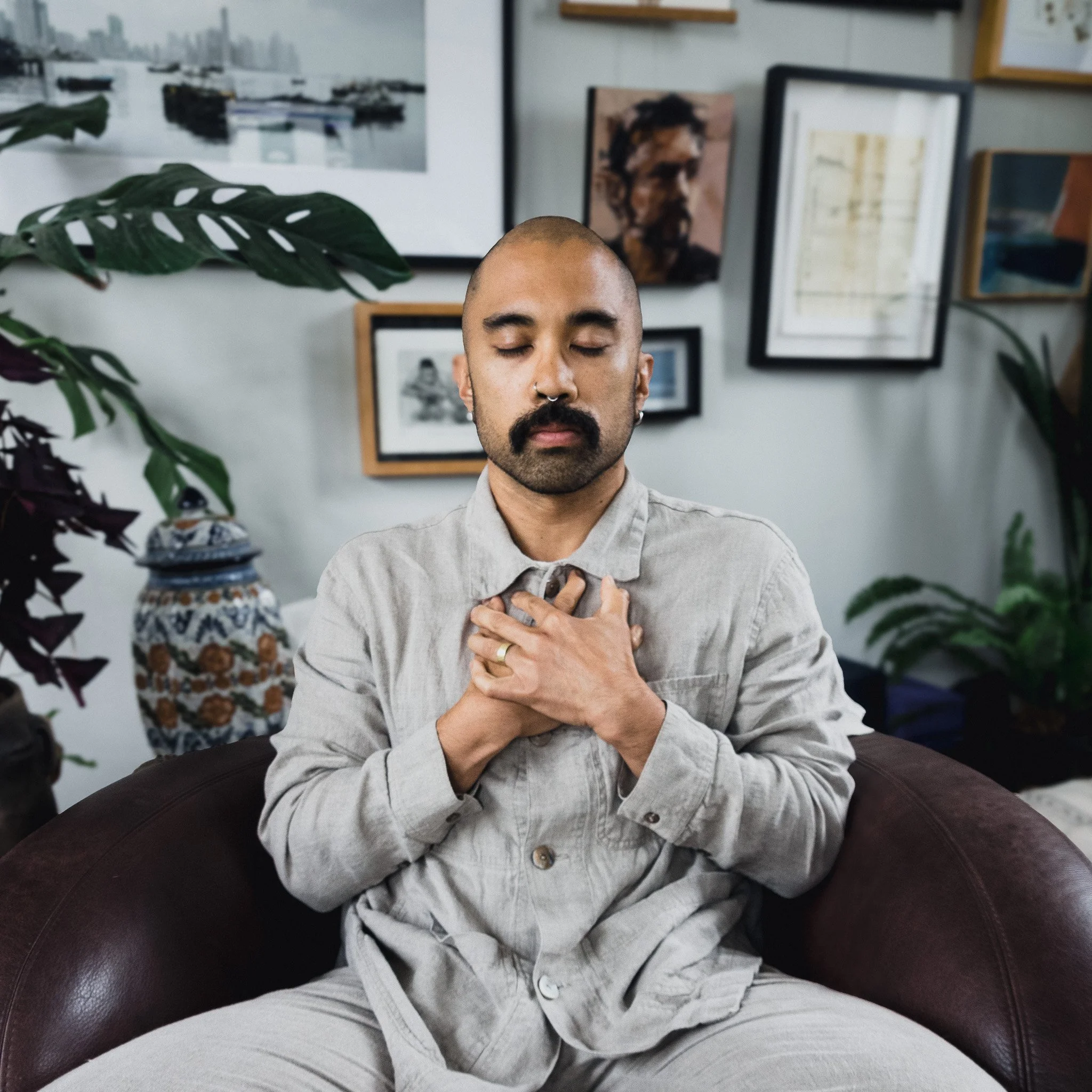
Living in Mexico has taught me what returning to my nature means for me. I have a spacious life here. I spend time outside. I garden. I love plants, and I get my hands dirty. Gardening is not the same as a workout, but it asks me to move around the yard, carry things, reach, lift, squat, and respond to something living.
I also strength train three or four times a week, do cardio once or twice a week, stretch, and practice yoga. Part of my philosophy begins with the simple fact that I live in a body. My body is able to grasp, hold, hang, squat, lift, push, and pull. Moving lets me experience those capacities rather than treating my body as transportation for my mind.
Not every body moves in these ways. Returning to our nature is not a fitness standard, and it should never become another way to judge a body living with disability, pain, illness, exhaustion, or limited access. Movement might be walking, gardening, stretching in a chair, lifting, dancing, or feeling the breath move the ribs. The form can change. What matters is contact with the body you actually have.
This is where philosophy becomes lived experience. It is one thing to understand regulation as an idea. It is another to notice that your shoulders feel different after working in the garden, that your breath deepens after walking, or that you can hear yourself more clearly after being indoors for a long time.
The nervous system needs rhythm, not a perfect routine

How to regulate your nervous system is often presented as a list of techniques: breathe this way, stimulate this nerve, take this supplement, or follow a perfect morning routine. Some practices can be supportive. But regulation is not a performance, and the nervous system is not a machine we can reset with the right sequence of buttons.
I think of regulation as a growing capacity to move through activation, settling, connection, fatigue, emotion, and recovery without being trapped in one state. That capacity is shaped partly by what happens in a somatic practice or coaching session. It is also shaped by the conditions we repeatedly live inside.
Movement is one of those conditions. The World Health Organization’s physical activity guidance notes that regular physical activity supports physical health, brain health, overall well-being, and reduced symptoms of depression and anxiety. This does not mean exercise cures emotional pain or that more intensity is always better. Sometimes the supportive movement is the one your body can do consistently without being punished by it.
Sleep and light are part of my rhythm too. I usually go to bed around 8:30 or 9:00 p.m. and wake between 4:45 and 5:30 without an alarm. I like being awake before sunrise and letting outdoor morning light signal that the day has begun. Research is still developing, but a 2025 study of morning light and sleep found that earlier light exposure was associated with more aligned circadian timing and healthier sleep patterns.
Morning light is a cue, not a cure. You do not need to stare at the sun, and waking before sunrise will not fit every body, season, work schedule, caregiver, or household. The deeper invitation is rhythm: What helps your body recognize morning? What helps it recognize that the day is ending? Is there enough consistency for sleep and wakefulness to feel less like an argument?
Food is another part of the environment I create for myself. Jerry and I rarely eat highly processed foods, though sometimes we get a bag of potato chips. We eat a lot of beans and vegetables. I eat meat, and Jerry is a vegetarian. I share that as a description, not a prescription. Food does not need to become moral, and one meal does not determine whether a nervous system is regulated. Nourishment is personal, cultural, financial, and shaped by access.
What I am noticing is not one magical habit. It is the cumulative effect of giving my body recognizable rhythms: movement and stillness, waking and sleeping, effort and nourishment, time indoors and time outside.
Community is part of nervous system regulation

Another part of my nature, and yours too, is community.
Here in San Miguel, I have two close friends I see frequently. Scott and Andrew are my friends, lunch partners, and sometimes companions beyond lunch. That time fills my cup. I also have people I see for dinner or an occasional gathering, and friends in the United States, including George, Brandon, and Jason, whom I stay connected with across distance.
These relationships do not remove every stressor. They do give my body experiences that chronic pressure often takes away: being seen, laughing, sharing food, having somewhere to bring what I am carrying, and remembering that I do not exist only to complete tasks.
The CDC’s guidance on social connection describes belonging and supportive relationships as important to mental and physical health. That does not mean every relationship feels safe or that loneliness is solved by putting more names in your phone. The quality, consistency, and mutuality of connection matter.
Sometimes the modern tiger is an email, a deadline, a notification, or a bill. Sometimes it is the loneliness that settles in after the screen goes dark. The body can respond to all of these as pressure, even when there is no visible animal chasing us. A trustworthy relationship can offer another kind of signal: You are not carrying this moment by yourself.
This is one reason I do not think regulation is entirely an individual project. We can meditate, exercise, optimize sleep, and eat carefully, yet still ache for contact. Co-regulation does not require someone to fix us. It can be as ordinary as sitting across from a friend who has enough time for the real answer.
Begin with one ordinary change
Returning to our nature does not mean reenacting a hunter-gatherer life. We have grocery stores, treadmills, sidewalks, calendars, and phones. Most of us cannot or do not want to abandon modern life. The question is whether we can restore some of the conditions modern life tends to thin out.
Maybe you begin with a 15-minute walk, if walking is available to you. Maybe you step outside after waking and let your eyes take in the morning without looking directly at the sun. Maybe you ask a friend to dinner once a month and protect that time from the part of you that always feels too busy.
These practices are small on purpose. A small practice gives the body a chance to experience something rather than turning healing into another ambitious plan. You can notice what happens before, during, and after. Does your jaw soften? Does the world feel wider? Do you feel more energized, more tired, more connected, or resistant? There are no wrong answers. Your body gets to inform.
A walk, morning light, or dinner with a friend cannot repair an exploitative job, unaffordable housing, discrimination, illness, or every source of chronic stress. These practices are not substitutes for medical care, therapy, or structural change. They are ways of offering the system one additional resource while you discern what larger changes may be needed.
I have written before about building a life at a pace your body can stay present for. That pace will not look the same for everyone. It may begin with less pressure rather than more discipline, and with one rhythm you can return to without abandoning yourself.
My philosophy is still becoming a body of work. What feels clear is that purpose, movement, rest, nourishment, outdoor time, and relationship are not decorations around a meaningful life. They are part of how I come back into contact with it.
If you want to explore this in the company of other men, THE PRACTICE is a weekly, donation-based space to slow down, reconnect with the body, and be with what is true. Cis, gay, bi, trans, and queer men are welcome. You can speak, listen, or simply notice what happens inside you. Come as you are, and participate at your own pace.