I am in a beautiful season of meditation right now.
I call it a season because my practice has never moved in a straight line. There have been stretches when I meditated intensely, and stretches when I barely meditated at all. Right now, I am 147 days into sitting every day. I have been practicing in some form since 2015, and between Headspace and Insight Timer, I have logged more than 22,000 minutes.
And I still can’t stop thinking during meditation.
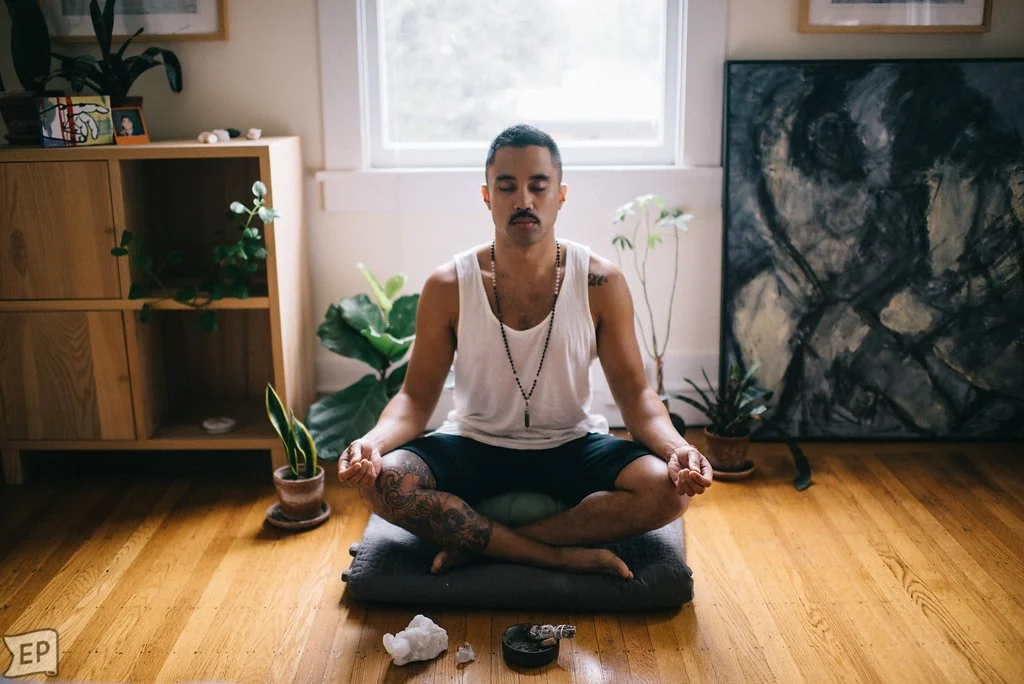
Circa 2017, Oakland, CA
If I had to guess, I spend about 90 percent of many sits inside my thoughts. I plan. I remember. I rehearse conversations. I ruminate on things that do not serve me. Sometimes my thoughts are unproductive. Sometimes they are vengeful. Then, somewhere in the middle of all that thinking, I notice my breath again. I feel the weight of my body. I come back.
For years, I thought the wandering meant I was doing it wrong. Now, I think the return may be the most important part.
You can listen to the original Living Letter here, or stay with me as I tell you what 22,000 minutes have taught me about a mind that refuses to be quiet.
The Myth of a Quiet Mind
The first time I meditated, I loved it. I sat for about 15 minutes, focused on my breath, and let myself be still. When I opened my eyes, I felt alive. It felt like I had discovered a new skill, or perhaps rediscovered an ability my body already knew.
That early experience gave me a relationship with meditation that I have been returning to for 11 years. At first, I used Headspace. I listened to Andy guide me back whenever thought pulled me away. Eventually, I got tired of Andy’s voice and moved over to Insight Timer because I wanted a simple timer. I wanted to sit without being guided.
The apps can count the minutes, but their totals are incomplete. They do not include meditations on retreats, the evening meditations Jerry and I do together, or the random moments when I knew I needed to stop and be still. Even with all that practice, my mind never became an empty room.
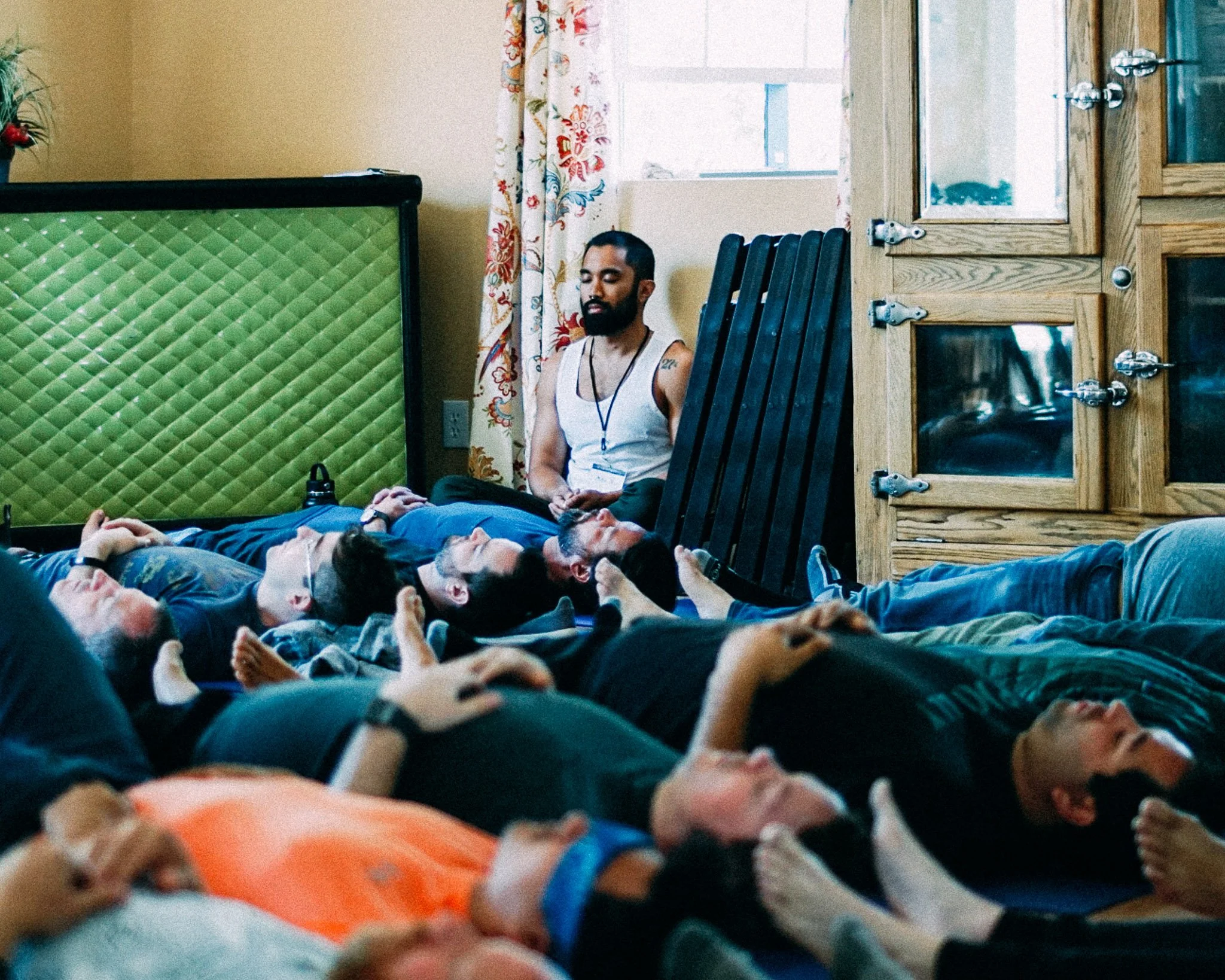
Circa 2020, Joshua Tree
That is one of the most persistent misunderstandings about meditation: the belief that a good meditator stops thinking. Johns Hopkins Medicine explains that mindfulness meditation is not about emptying the mind or pushing thoughts away. It is about noticing what is happening, letting thoughts move, and returning to the present.
Thought is not evidence that you have failed. It is evidence that you have a mind.
Still, I understand the frustration. You sit down hoping for relief, and suddenly your brain hands you tomorrow’s list, an old argument, a regret from ten years ago, and a problem that did not feel urgent until the room got quiet. Your jaw tightens. Your chest braces. Then another thought arrives: I am bad at this.
That second layer is often where the suffering grows. The mind wanders, which is human. Then we judge ourselves for wandering, which creates pressure. We turn a practice of awareness into another place where we have to perform.
Noticing the Wandering Is Part of Meditation
My old pattern was simple. I would become absorbed in thought, realize I had drifted, and feel frustrated with myself. I treated the return like a correction. I imagined the real meditation was happening only during the few quiet moments before my attention wandered again.
Today, I see those moments differently. If 90 percent of my sit is spent thinking, then perhaps 10 percent is spent noticing my breath, my stillness, my presence, and the sensations in my body. Ten percent may not sound impressive. But practiced over years, that return becomes familiar.
There is research that helps name this process. In a small brain-imaging study of experienced practitioners, researchers described a four-part cycle during focused attention meditation: mind wandering, becoming aware that the mind has wandered, shifting attention, and sustaining attention again. The study, published in NeuroImage, did not frame meditation as uninterrupted focus. The practice itself included losing the object of attention, noticing, and returning.
That matters to me because the moment of noticing is not outside the meditation. It is one of the skills meditation can cultivate.
From a somatic perspective, returning can also be understood as an act of reorientation. I notice where I have gone, then make contact with what is here. The breath moving at the nostrils. The rise and fall of the belly. The pressure of the floor beneath me. The temperature of the air on my skin. I do not have to attack the thought or make it disappear. I can let my body help me find the present again.
Over time, I have felt this capacity travel beyond the cushion. When I become distracted from myself, or notice that I have dissociated, I have more practice finding my way back. Not perfectly. Not instantly. But more often than before.
The return is small, but it compounds. One breath. One sensation. One moment of recognizing, I am here again.
Meditation Became a Relationship, Not a Performance
I am currently working toward sitting for 60 minutes. For a while, I was sitting for 30 minutes each morning. Then 30 minutes began to feel like it was not enough, so I started adding one minute at a time. Now I am around 45 or 46 minutes, the longest I have sat in years.
I am proud of that. Not because sitting longer makes me more evolved, and not because I expect a 60-minute sit to carry me into transcendence. I am proud because remaining with myself for 45 minutes is an accomplishment, even when much of that time is filled with thought.
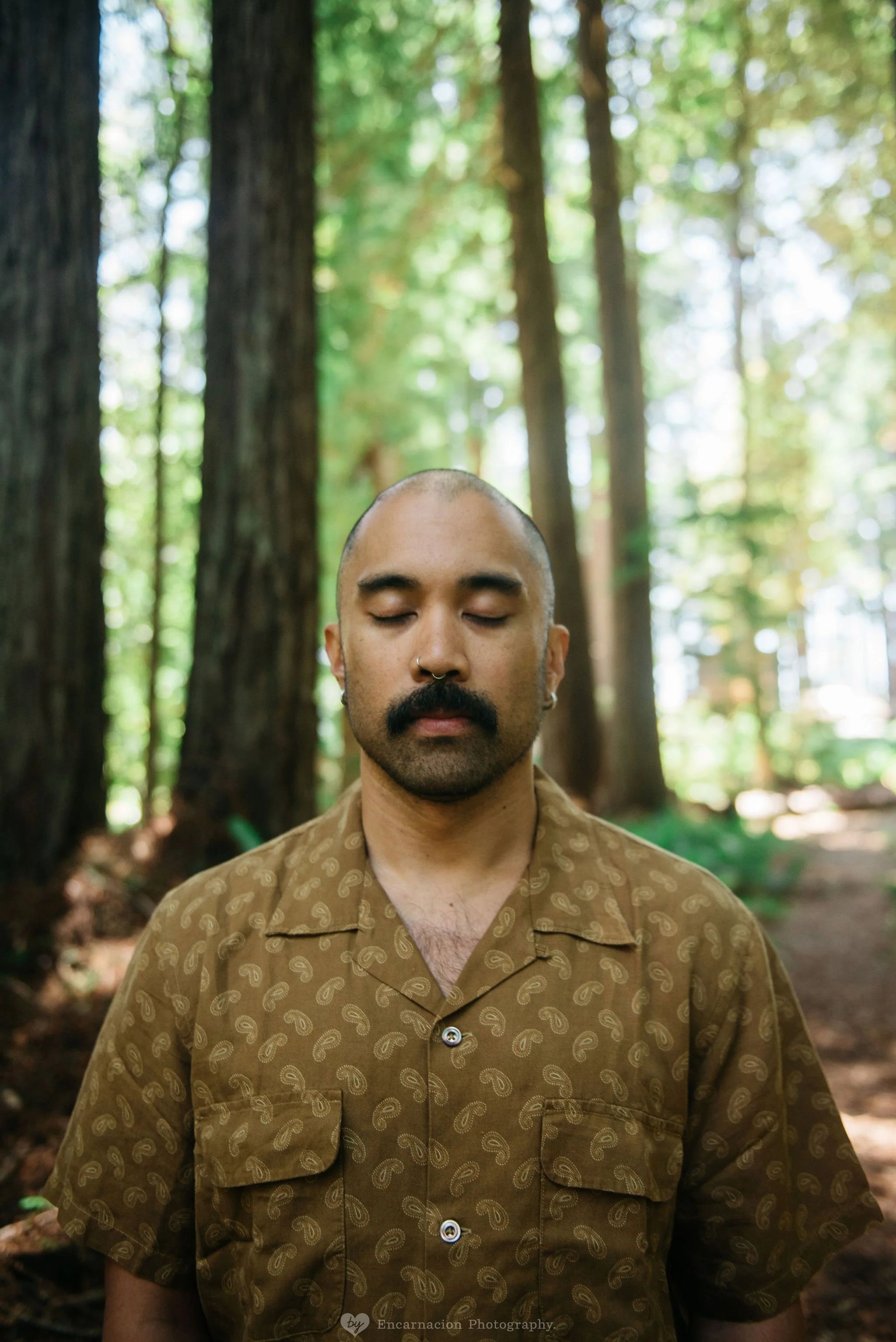
Circa 2024, Mendocino
There is an important distinction here. A practice can contain discipline without becoming a performance. The number on the timer can offer structure, but it cannot tell me whether I was kind to myself. A streak can show consistency, but it cannot measure presence. Twenty-two thousand minutes can tell me that I have spent time on the cushion. They cannot make me an expert on being human.
What keeps bringing me back is not mastery. It is pleasure. I find pleasure in being with myself, with my thoughts, and with my presence. Even when my inner world is messy, sitting gives me a place to meet it without immediately acting on it.
In my own life, that practice supports my marriage, my physical and emotional well-being, and my desire to live more slowly. I do not mean that meditation cures every struggle or guarantees calm. The evidence for meditation varies by condition, outcome, and study quality, and the National Center for Complementary and Integrative Health recommends reading broad claims with care. Some people also have difficult experiences during meditation, including increased anxiety or distress.
Your body gets to inform the practice. If closing your eyes makes you feel less safe, you can keep them open. If following the breath increases activation, you might feel your feet or look around the room instead. If a long sit overwhelms you, you do not have to stay to prove anything. Meditation can support healing, but it does not replace therapy, medical care, or mental health support when those are needed.
The practice should have room for your actual nervous system, not an idealized version of who you think you should be.
When Your Mind Wanders, Practice Returning
If you have been avoiding meditation because your mind is busy, you do not have to wait until it becomes quiet. You can begin with the mind you have today.
Choose one anchor that feels accessible. It might be the breath, but it does not have to be. You could notice the contact between your feet and the floor, the weight of your hands, or one steady sound in the room. Let your attention rest there without gripping.
At some point, thought will carry you away. You may not notice for several seconds or several minutes. When awareness returns, see if you can pause before criticizing yourself. Silently name what happened: thinking, planning, remembering, worrying. Then allow your attention to come back to the anchor.
That is enough. You do not need to punish the wandering mind. You do not need to restart the timer. You do not need to turn a difficult sit into a story about your worth.
You might also release the demand for a heroic practice. Five honest minutes can be more supportive than 30 minutes spent overriding your body. Consistency has helped me, but my consistency has always included seasons of stopping and beginning again. I keep sitting every day now, but the larger truth is that I keep returning to meditation after time away.
Maybe that is what practice really is. Not a perfect streak, but a relationship sturdy enough to survive interruption.
I am still in my head. After 11 years, my mind still wanders into old conversations, future plans, and stories that tighten something in my body. But now there is also a moment when I feel the breath again. There is a moment when the room comes back. There is a moment when I come back to myself.
Those moments have not made me a monk. They have helped me become more present in my own life.
I share reflections like this through Living Letters, but there is nothing you need to do with this one. Just notice what happens in your body when you consider that the wandering may not be the failure. The noticing may be the practice. The return may be enough for now.