Burnout in Men: Why High-Functioning Men in the San Francisco East Bay Feel Exhausted, Numb, and Disconnected
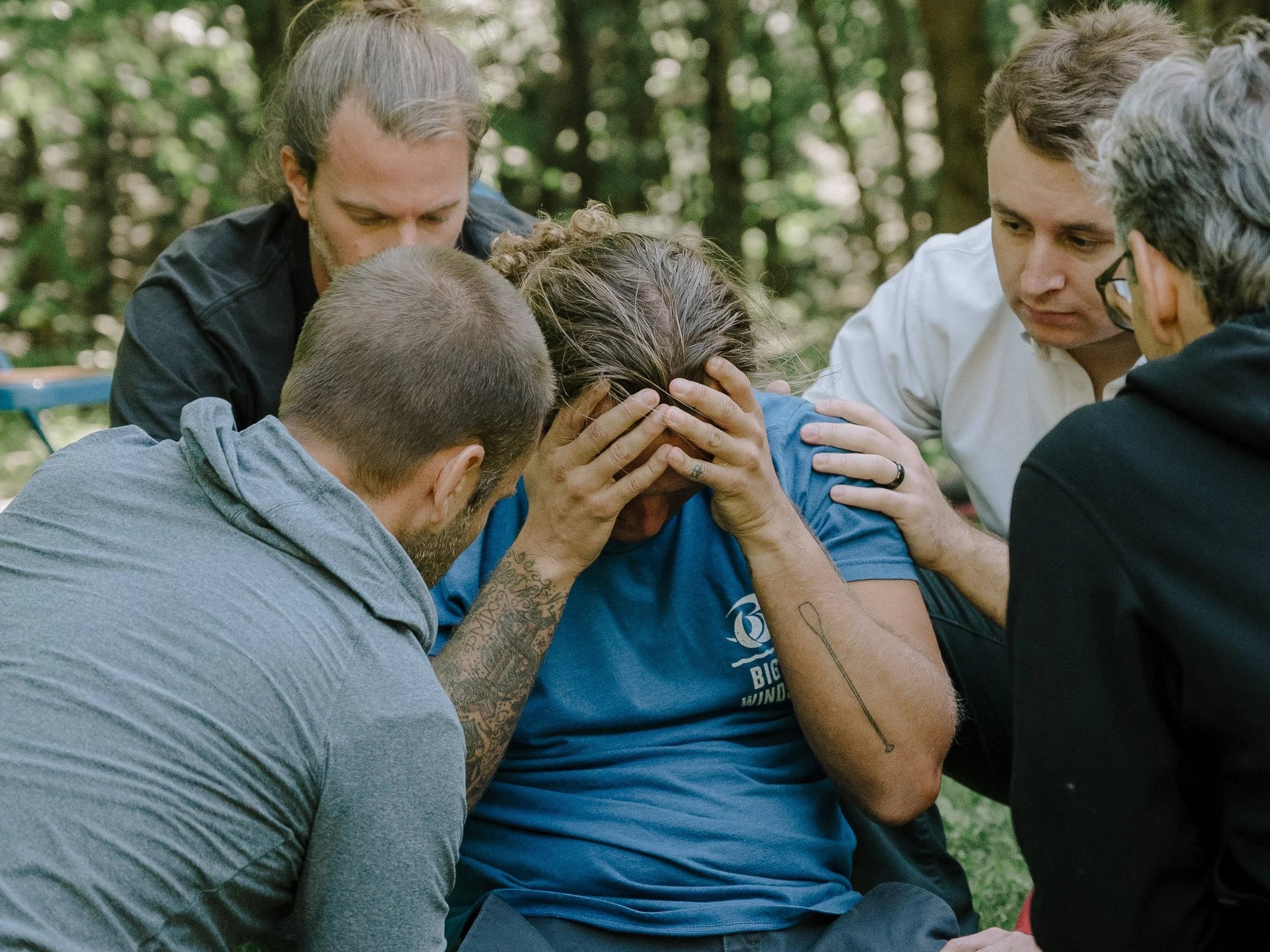
Burnout in men does not always look like breaking down.
In the San Francisco East Bay, it often looks like competence.
It looks like a man who is still producing, still responding, still holding responsibility. It looks like someone who hasn’t missed a deadline, hasn’t scared anyone, hasn’t “fallen apart.” He’s tired, yes. But who isn’t?
And yet there is a private knowing. A sense that something vital has thinned out.
You get through the day. You handle what needs to be handled. But your inner life feels quieter than it used to. Less color. Less charge. Less meaning.
That quiet thinning is often where burnout begins.
What Burnout in Men Can Feel Like
Burnout doesn’t always start with collapse. It often starts with compression.
You might notice you wake up already slightly braced. Your jaw tight before you even check your phone. Your chest a little tight, like you’re already preparing for impact. The day hasn’t begun, but your system is on guard.
There can be a low-grade irritability that follows you. Not explosive. Just steady. Conversations feel like tasks. Time with your partner feels logistical. You’re present, but not permeable. Nothing really lands.
Stress has momentum in it. It’s sharp. It moves. Burnout is different. It feels heavier, more muted. You’re still moving, but something underneath feels slowed or distant.
Many high-functioning men in the East Bay narrate this as discipline.
“I just need to grind through this quarter.”
“It’s temporary.”
“I’ll rest when things settle down.”
But things rarely settle down on their own here. The pace is ambient. The competition is subtle but constant. Housing is expensive. Expectations are high. The nervous system adapts to that climate. It learns to stay online longer than it was designed to.
Over time, the cost of that adaptation is emotional range.
Common Signs and Symptoms of Burnout in Men
Burnout symptoms in men often hide inside productivity.
Emotionally, there may be less access to pleasure. Wins feel transactional instead of satisfying. You might feel cynical in ways that surprise you. Or you swing the other direction and become hyper-focused, almost restless, unable to sit still without reaching for stimulation.
Behaviorally, you may increase output rather than decrease it. More hours. More optimization. More metrics. When the body feels drained, the mind tries to compensate with effort. Even late-night scrolling can be an attempt to stay stimulated when your system is actually asking for restoration.
Physically, chronic tension becomes familiar. Shoulders that never quite drop. Breath that stays high in the chest. Sleep that doesn’t fully refresh you. A background contraction that you don’t notice until someone points it out.
Relationally, burnout can show up as impatience. Short answers. Less humor. Less desire for depth. Intimacy feels like one more demand rather than something nourishing.
None of these signs alone define burnout. But when they cluster together and linger, they deserve attention.
Why So Many Men Experience Burnout (And Why It’s Not a Personal Failure)
The East Bay is an achievement-oriented ecosystem. Tech leadership. Entrepreneurship. Long commutes. Financial stakes that are high enough to keep your nervous system slightly vigilant at all times.
For many men, identity is braided with usefulness. Being the provider. Being the one who figures it out. Being steady. Rest does not always feel neutral. It can feel undeserved or risky.
There is also the quieter influence of hustle culture. Productivity as virtue. Exhaustion as proof of commitment. The idea that slowing down means losing ground.
When this narrative fuses with masculinity, burnout becomes almost predictable.
Your nervous system does not interpret cultural messaging. It interprets demand and recovery. If demand consistently outweighs recovery, the system adjusts. It either stays in prolonged activation, which eventually frays the edges of health, or it shifts into a lower-energy state to conserve.
That shift is not weakness. It is protection.
When men understand burnout as an adaptive response rather than a personal flaw, the conversation changes. The question moves from “What’s wrong with me?” to “What has my system been managing for a long time?”
That question opens something more useful than self-criticism.
The Nervous System and Burnout in Men (And How Change Happens)
Your body is not separate from your ambition.
When stress runs chronically, your system stays mobilized. Heart rate slightly elevated. Muscles primed. Attention scanning for the next task. This can feel productive at first. But over months or years, sustained mobilization taxes the body. Inflammation increases. Sleep architecture shifts. Digestive patterns change. Emotional range narrows.
Eventually, some systems downshift. Motivation decreases. Energy flattens. This is not laziness. It is conservation.
Many high-functioning men live in what looks like full engagement while internally feeling muted. This is the freeze-functioning paradox. You are outwardly capable and inwardly constrained at the same time.
The hopeful reality is that the nervous system is not fixed. It is shaped by experience. If prolonged demand shaped it toward contraction, repeated experiences of safety and regulated connection can shape it back toward flexibility.
Change does not happen through force. It happens through repetition of manageable, embodied experiences.
Learning to Regulate and Find Stillness
You cannot out-think burnout.
Most men who reach this point already understand their patterns. Insight is not the issue. The issue is capacity.
Regulation begins quietly. It might be noticing your breath before you answer a difficult email. It might be feeling your feet on the ground while someone is speaking to you instead of preparing your response. It might be practicing non-sleep deep rest instead of defaulting to stimulation at the end of the day.
Sometimes it is as simple as softening muscle tone intentionally. Letting your shoulders drop. Letting your tongue rest in your mouth. Allowing your belly to expand on an inhale and not immediately bracing again. These small shifts signal safety to the body in ways the mind cannot.
Recovery from burnout is not about becoming less driven. It is about expanding your window of tolerance so that drive does not cost you your internal life.
Stillness, when practiced gradually, becomes strengthening rather than threatening.
What Somatic Work Offers Men Experiencing Burnout
There is a difference between talking about exhaustion and feeling where exhaustion lives in your body.
Somatic work slows the pace enough for you to notice sensation. Where do you brace when you talk about work? What happens in your chest when you mention finances? Does your breath change when you speak about your partner?
These are not abstract questions. They are entry points.
In an in-person group, especially in the Bay Area where performance is so normalized, something different can happen. You are not optimizing. You are not presenting. You are tracking sensation. Listening. Letting your nervous system take cues from other regulated nervous systems in the room.
Co-regulation is not dramatic. It is subtle. But many men have never experienced spaces that are not competitive, strategic, or outcome-driven. When your body senses that it does not need to perform, contraction can ease.
From there, emotional range begins to widen naturally.
Not forced. Not cathartic. Just gradually more alive.
Frequently Asked Questions About Burnout in Men
Is burnout the same as depression?
They can overlap, but they are not identical. Burnout is typically tied to prolonged stress and often improves when demand decreases and regulation increases. Depression can be more pervasive and less responsive to environmental shifts. If you are unsure, consulting a licensed provider in the East Bay for assessment is wise.
How long does burnout recovery take for men?
It depends on duration and intensity of stress exposure. Some men feel shifts within weeks once regulation practices begin. Deeper recalibration can take months. Consistency matters more than intensity.
Can burnout damage relationships?
Yes. Emotional narrowing reduces availability. Irritability increases. Partners may feel distance without knowing why. As nervous system capacity increases, relational warmth often returns organically.
Do successful men experience burnout more often?
High achievement environments increase sustained activation. When rest and recovery are not equally prioritized, burnout risk rises. Success itself is not the cause. Chronic overextension is.
Should I see a therapist or attend a somatic program?
For some men, therapy is essential, especially if trauma or depression is present. Somatic programs can complement therapy by working directly with regulation and embodied capacity. The approaches are not mutually exclusive.
SHIFT: A Somatic Weekend for Men in the Bay Area
If you are reading this and recognizing the quiet contraction in yourself, you may not need more information.
You may need a different pace.
SHIFT: A Somatic Weekend for Men takes place on April 4th and 5th in the San Francisco East Bay. It is designed for high-functioning men who are ready to experience their nervous systems differently, not just understand them intellectually.
Over two days, we move slowly. We learn how stress lives in the body. We practice regulation in real time. We build capacity through guided somatic work and small-group integration. There is structure, but there is also space.
It is not about dismantling your ambition. It is about restoring range so that your ambition does not cost you your aliveness.
If you are ready for that kind of room, it’s here in the East Bay.
For further reading, check out: Is Somatic Experiencing Effective for Male Burnout or Anxiety?