Emotional Numbness in Men: Why You Feel Disconnected and What Actually Helps

What Emotional Numbness in Men Really Feels Like
When men talk about emotional numbness, they rarely describe it as despair or deep sadness. More often, they describe a quiet dulling. A sense that life is happening, but they feel slightly removed from it.
They might say, “I’m fine,” and mean it, while also knowing something is missing. There’s no dramatic pain. Just flatness. Disconnection. A sense of going through the motions.
Emotional numbness is a survival strategy.
When stress or emotional demand feels too much to process, the nervous system adapts by turning the volume down. This can reduce pain and preserve energy when there is no clear way to respond.
In modern life, men are exposed to constant stressors. Notifications. Emails. Deadlines. Relationship tension. Financial pressure. Expectations to perform and provide. Over time, something inside doesn’t know how to keep mobilizing in the face of it all. Instead of moving into action, the system goes quiet.
Numbness doesn’t always mean feeling completely disconnected from the body. For many men, it shows up as a dull pressure, heaviness, or muted sensation in the chest, belly, or throat. Sensation may still be present, but it feels distant or hard to access.
What often makes numbness harder is the shame that comes with it. Because many men were never taught emotional literacy or somatic awareness, numbness can feel confusing or isolating. And because men are rarely encouraged to speak openly about their internal experience, many carry this alone.
When that happens, coping becomes a way to get through the day. Overworking. Distraction. Numbing behaviors. Pushing through. These are not signs of weakness. They are signs of adaptation.
Common Signs of Emotional Numbness and Shutdown in Men
One of the most common signs of emotional numbness in men is difficulty taking action. This doesn’t usually look like laziness or lack of motivation. More often, it feels like being stuck. Knowing something needs to change, but not feeling able to move.
This can show up as staying in a job or relationship long after it no longer fits, or struggling to care for health through movement, exercise, or nourishment. The desire may still be there, but the internal capacity feels limited.
Over time, a lack of aliveness can settle in. Joy feels muted. Gratitude feels distant. Life becomes more about endurance than engagement. What looks like low energy is often the result of energy being used to hold things together.
In relationships, emotional numbness often shows up as withdrawal. Men may shut down during conflict, avoid feedback, or isolate instead of staying engaged. Hard conversations feel overwhelming, not because they don’t matter, but because the system does not feel resourced enough to stay present.
The body often reflects this shutdown as well. Some men notice reduced sensation in their hands, arms, feet, or legs. Others have difficulty sensing tension or relaxation at all. The body feels distant, reinforcing the sense of disconnection.
Taken together, these signs point to a nervous system under sustained strain.
Why So Many Men Feel Numb (And Why It’s Not a Personal Failure)
For many men, emotional numbness does not come from a single event. It develops slowly as the nervous system adapts to environments that do not support emotional expression or bodily awareness.
From an early age, many boys are taught to override internal signals. In families, schools, and social settings, emotions like fear, sadness, or tenderness are often discouraged or minimized. Boys learn to perform, comply, or push through rather than slow down and feel.
The education system rarely supports nervous system regulation or emotional literacy. Children are rewarded for sitting still, suppressing sensation, and prioritizing cognitive performance over internal awareness. For many boys, success requires disconnection from the body.
Over time, the nervous system adapts. Sensation is dampened. Emotional signals are muted. This is not a conscious choice. It is a physiological adjustment to repeated experiences of not being met.
As these patterns continue into adulthood, stress accumulates. Work pressure, financial responsibility, relationships, and constant stimulation keep the nervous system activated without enough support for regulation or discharge. When there is no clear path back to balance, numbness can become a long-term strategy.
Understanding this matters. When numbness is framed as a personal flaw, men often push harder or judge themselves more harshly. When it’s understood as an adaptive response, the focus can shift toward supporting the nervous system back into safety and connection.
The Nervous System, Emotional Numbness, and How Feeling Returns
Emotional numbness is not a psychological malfunction. It is a nervous system response.
When the nervous system perceives ongoing stress or threat without a clear path to resolve it, it looks for ways to protect the body. If fighting or fleeing does not feel possible, the system may shift into a freeze or shutdown state.
In this state, blood flow and metabolic resources are prioritized toward the core of the body to support vital organs. Sensation in the limbs may diminish. Emotional range narrows. Preservation becomes the priority.
This response requires ongoing effort. Suppressing sensation, emotion, and impulse takes energy. Over time, this can lead to fatigue, fogginess, and depletion. What looks like low energy is often the result of the system working to stay contained.
Because numbness lives in the nervous system, insight alone is often not enough to shift it. Many men understand themselves well. They can explain their history and name patterns. And still, their internal experience remains unchanged.
The nervous system responds to cues of safety, not explanation.
For men who feel numb, reconnection often begins not with emotion, but with sensation. Breath moving in the chest. Pressure through the feet. Subtle sensation in the hands. These simple experiences are often more accessible than feelings like sadness or joy.
This process needs to happen slowly. When sensation arrives with too much intensity, the system can become overwhelmed and return to shutdown. This is why somatic work emphasizes pacing and titration. Small moments of sensation, followed by rest. A little awareness, then a pause.
Over time, the body learns that feeling does not equal danger.
Why Talking About It Isn’t Always Enough
Many men who feel emotionally numb are not lacking insight. They often understand themselves well. They can explain their history, name patterns, and describe why things make sense.
And still, nothing changes.
You might leave a conversation or therapy session feeling clearer in your head but unchanged in your body. You know what happened. You know why it makes sense. And yet, the numbness remains.
This is because numbness doesn’t live in thought. It lives in the body.
When the nervous system has learned that feeling is unsafe or overwhelming, insight alone does not create change. Without enough regulation, revisiting difficult experiences can even reinforce shutdown.
This doesn’t mean talking is useless. It means talking needs to be paired with approaches that help the body feel safe enough to reengage.
What Somatic Work Offers Men Who Feel Numb
Somatic work offers men a different relationship with healing. One that does not ask them to push, perform, or explain themselves into change.
Rather than focusing on insight alone, somatic approaches work directly with the nervous system and the body. The goal is not to feel more, faster. It is to build the capacity to stay present with what is already there.
For men who feel numb, this matters. Numbness is not something to break through. It is something to listen to.
In practice, somatic work often looks simple. Slowing down. Tracking sensation. Noticing subtle shifts in breath or posture. Learning when to stay with an experience and when to pause.
Somatic approaches are choice-based. Men are not asked to relive painful experiences before their system is ready. The pace is guided by the body, not an agenda.
As the nervous system learns it no longer has to stay on guard, emotional range, resilience, and a sense of aliveness can begin to return.
SHIFT: A Somatic Weekend for Men SF Bay Area
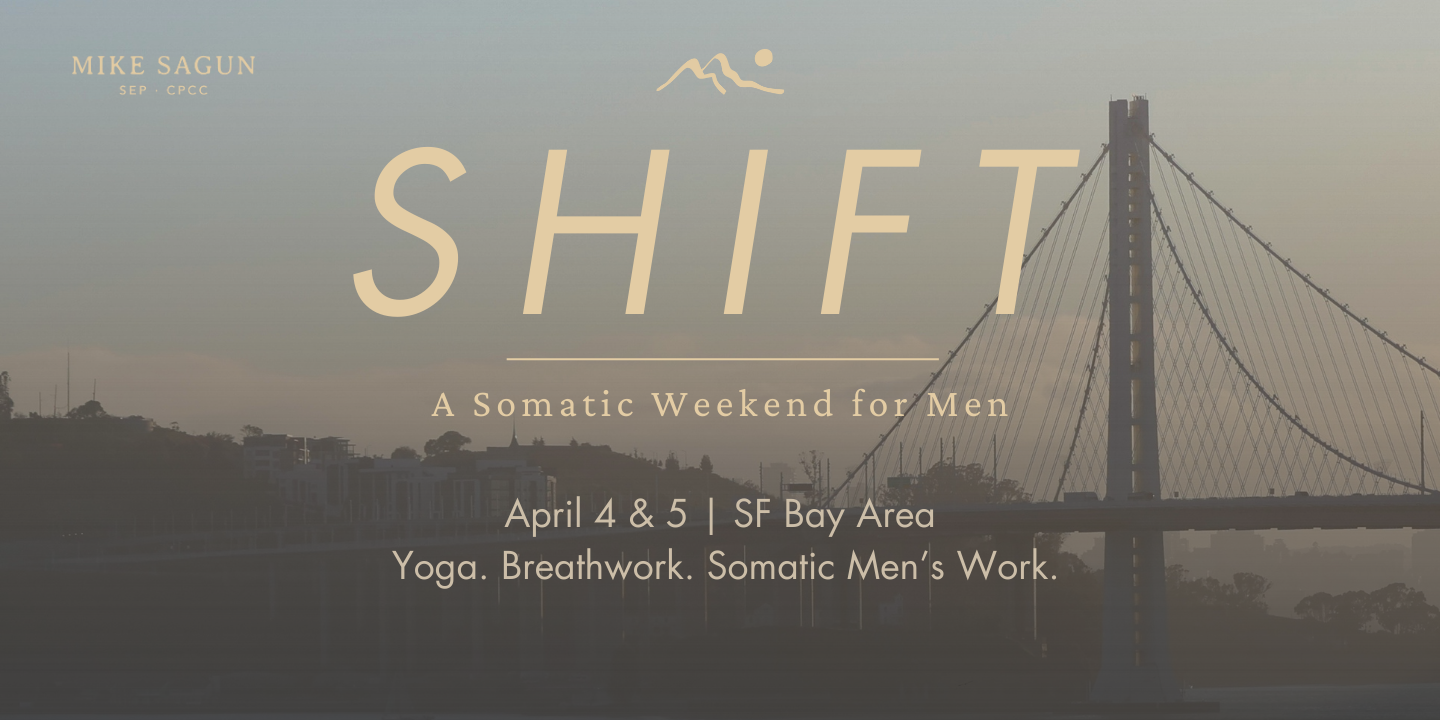
If what you’ve read here resonates, you’re not alone. Many men arrive at this work having already done a lot of thinking and reflecting. What they’re often missing is a space to slow down and let their nervous system catch up.
SHIFT: A Somatic Weekend for Men is a weekend designed for men who feel numb, disconnected, or shut down and want to gently come back into their bodies. The focus is not on fixing or forcing change. It’s about creating the conditions for regulation, safety, and reconnection to happen naturally.
Over the course of the weekend, men are guided through body-based practices that support nervous system regulation, emotional awareness, and embodied connection. The work is experiential, choice-based, and trauma-informed.
SHIFT takes place in California and is designed for men who want to feel more alive, present, and connected without having to perform or explain themselves.
If you’re curious, you can learn more about SHIFT or explore whether it’s the right next step for you.