Can loneliness cause irritability? What a hard day taught me

At the bank in Centro, I couldn't withdraw money because the signature on my Mexican driver's license didn't match the one in their system. I had already been sitting in traffic. I had more errands to run and appointments to get to. Now there was another thing to sort out.
I can laugh about it today. Yesterday, my response was closer to: What the fuck?
Can loneliness cause irritability? That question became personal for me over the course of that day. At first, all I knew was that ordinary frustrations were taking up an unusual amount of space. Things I could usually meet with some patience felt like more than I could handle.
The errands were real. So was the frustration. It took me a little longer to recognize what else I was carrying.
The part of the day that followed me home
There was traffic around Independence Day here in Mexico, and the bank needed me to speak with the person who had set up our account. I didn't have time. I left and used the ATM.

These were the kinds of complications I generally expect. Usually, I can acknowledge the inconvenience and move on. That morning, one thing kept piling onto the next. My capacity felt thin.
Later, at home, I tried to work. More irritability. More impatience. Tasks I would normally manage felt difficult, and I had the sense that the world was closing in on me.
That was what finally got my attention: the feeling had come home with me.
So I paused and got curious about what I was feeling. Loneliness was there.
Jerry and I had been apart for more than a week and a half. He was in Europe. I had been in Baja. Bert was sick, and the last few days had been tough. I hadn't been getting the connection I was craving.
Naming that gave the day more context. I could see how much I was asking myself to move through while feeling alone.
I share this experience in my Living Letter, How Loneliness Teaches Me. What stays with me is how long I could feel irritated before I recognized that I was missing connection.
Before you decide what your irritability means
I want to make room here for uncertainty. Irritability alone cannot tell you whether you're lonely. A frustrating situation deserves to be acknowledged on its own terms, and you don't have to uncover a deeper meaning every time something annoys you.
For me, the useful clue was a change from my usual capacity. I was struggling with things I could ordinarily navigate. That difference invited my attention.
You might recognize something similar: the small request that feels enormous, the delay you keep replaying, the ordinary task you suddenly cannot face. There may be a need underneath that deserves some care.
If you want to explore that, take a brief pause somewhere you don't need to respond immediately. Let your attention rest on something around you, or on the support of the chair beneath you, if that feels comfortable. You do not have to change your breathing or make yourself calm.
Then consider one question: What have I been missing lately?
Perhaps it's company. Perhaps it's rest, support, or time without another demand. You might notice a feeling in your body, find a word, or have no clear answer. Leave room for that. This is an invitation to listen, and you can stop if turning inward feels uncomfortable.
The point is to give yourself a little more information before deciding how to respond. For me, recognizing loneliness made connection feel like a relevant next step.
Being known gave us room to be silly
I already had my men's group on the calendar that evening. We'd been meeting for more than five years, and once a quarter we have a game night. It gives us a chance to play together alongside the deeper conversations we have each week.
That night, there was silliness, playfulness, and the kind of banter that feels loving because we know each other.
I felt levity return. The loneliness started to lift, and I felt more connected to myself.
The familiarity mattered. These were men with whom I had built rapport over years. We had enough shared experience for that playfulness to feel good to me. There was a relationship underneath the laughter.
I think about that when connection starts to sound like another difficult assignment. If you're already worn down, the idea of explaining your entire inner life may feel exhausting. You may want company without having to find the perfect language for why you need it.
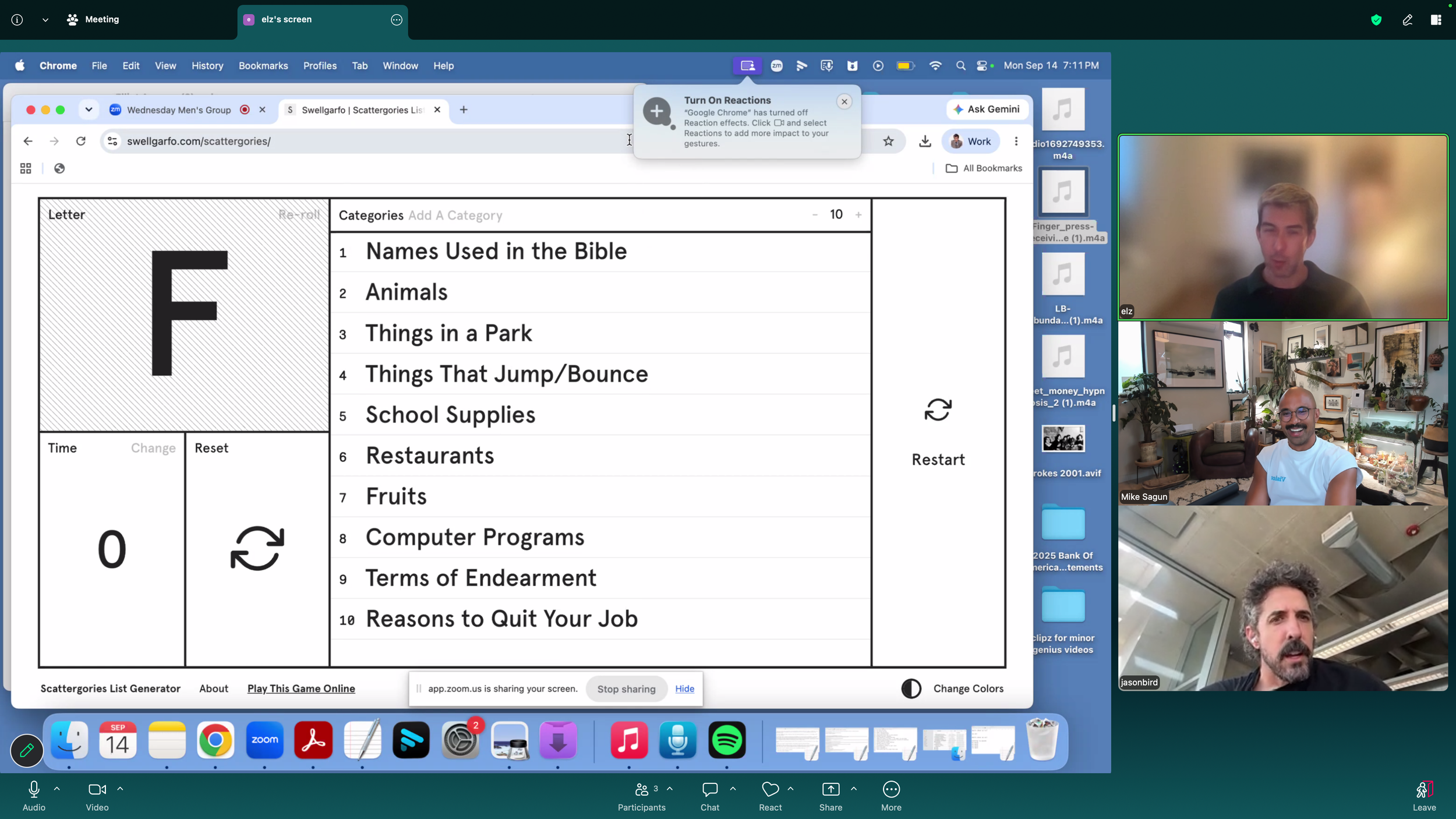
There is room for that. An ordinary conversation or a little shared silliness may be a welcome way to spend time with someone you trust. You get to notice whether it actually feels connecting.
For me, that evening held a kind of ease I had been missing all day. Through a somatic lens, one way I understand it is that familiar, welcome contact gave me room to soften. I'm describing what I felt, without assuming that everyone would have the same experience in that group.
The next day, I hosted THE PRACTICE. As a facilitator, I watched men share vulnerably. About fifteen minutes after the call, when I recorded the letter, I still felt that sense of expansion. I could hear the smile in my own voice.
The tasks that had felt so difficult the day before seemed manageable again.
Loneliness in men needs room for different stories
My experience was a brief period of loneliness that eased with familiar connection. Some people live with loneliness for much longer, without a trusted group already waiting on their calendar. I want to respect that difference.
The World Health Organization describes loneliness as the distress we feel when our relationships don't meet the connection we want or need. Its 2025 estimates suggest about one in six people globally experiences loneliness. That helps explain why this has become a public health concern, and why simply counting the people in your life may miss what you're feeling. Read WHO's explanation of social connection.
You can have people in your life and still miss being known in a particular way. You can appreciate your relationships and wish for more closeness within them.
When we talk about male loneliness, I also want us to stay curious about the person in front of us. A 2025 Pew Research Center report found that U.S. men and women reported loneliness at similar rates, while men were less likely to turn to a range of people for emotional support. Read Pew's research on men, women, and social connections.
That finding leaves us with something useful to consider: who feels available when we need support? Each man's answer will be different.
For some, reaching out may carry the memory of being dismissed or ridiculed. Hesitation can make sense in that context. A welcoming connection should have room for your boundaries, your identity, and the pace at which trust develops.
You do not owe anyone immediate vulnerability to prove you're willing to connect.
Choose a kind of contact you can actually welcome
If you recognized yourself in my day, you might begin with one person whose company usually feels good. Consider what kind of contact you have room for: a short call, a walk, or something playful you already enjoy together.
An invitation can be specific and modest: “I've been missing some company. Are you free for a short call this week?” Those are words you can adapt, if they fit. You don't have to explain more than you want to.
If no one comes to mind, that can hurt. It may also mean beginning somewhere that allows familiarity to grow over time, through a shared interest or a recurring gathering. My group had five years of relationship behind that game night. Please don't measure a first meeting against that history.
Afterward, you can notice how the contact felt. Was there any ease? Did you feel welcome? Would you want to return? An experience that doesn't help is information, too. You haven't failed at connection.
And if loneliness persists or is making daily life difficult, professional mental health support can be part of your care alongside relationships and community.
For men who are curious about a facilitated space to reconnect, you're invited to explore THE PRACTICE. You can read about the gathering and see whether it feels like a fit.
I keep returning to the distance between those two afternoons: one when ordinary tasks felt overwhelming, and another when I could hear a smile in my voice. In between, I had noticed a need and spent time with people who knew me.
Sometimes the connection I'm craving has room for laughter. I'm learning to let that count.