Burnout Symptoms in Men: How High-Functioning Men in the Bay Area Get Burned Out (and What Actually Helps)

What Burnout Really Feels Like for Men
For many men, burnout doesn’t announce itself as a breakdown. It’s quieter than that.
You’re still functioning. You’re showing up to work. You’re getting things done. But something feels dimmer inside.
Burnout often feels like emotional flatness. Less curiosity. Less range. Things that used to matter don’t land the same way. You might notice irritability creeping in, or a low-level resentment toward obligations that once felt manageable. Some men describe it as feeling “offline” or like they’re watching their life from a few feet away.
This is different from normal stress. Stress has an edge to it—activation, urgency, pressure. Burnout is what can happen after prolonged stress, when the system no longer has the capacity to stay engaged. It’s not that you don’t care. It’s that your body has learned to conserve energy.
Many men don’t call this burnout. They call it being tired. Or busy. Or unmotivated. But underneath, there’s often a deeper disconnection from the body, from emotion, and from a felt sense of being alive.
Common Burnout Symptoms in Men
Burnout symptoms in men tend to show up across multiple layers at once, even if they’re subtle.
Emotionally, there may be numbness, cynicism, or a short fuse. Joy feels muted. Gratitude feels forced. There’s less access to sadness or grief too—it’s not just positive emotions that disappear.
Cognitively, men often report brain fog, difficulty concentrating, or decision fatigue. Simple choices feel oddly heavy. Motivation drops, especially for things that aren’t strictly required.
Physically, burnout often looks like chronic fatigue that doesn’t resolve with rest. Tension in the jaw, neck, or shoulders. Shallow breathing. Sleep that doesn’t feel restorative, even when you get enough hours.
Behaviorally, many men cope by overworking, withdrawing, scrolling, drinking more than they want to, or staying busy to avoid feeling what’s underneath. These strategies aren’t failures. They’re attempts to regulate an overwhelmed system.
Why So Many Men Experience Burnout (and Why It’s Not a Personal Failure)
Men are often trained—explicitly or implicitly—to measure worth through output. Productivity becomes identity. Rest becomes something you earn, not something you need.
In the San Francisco Bay Area, these pressures can be amplified. High performance cultures, long hours, constant connectivity, and a cost of living that quietly raises the stakes of everything. Even meaningful work can become relentless when there’s no room to slow down.
Burnout rarely comes from one dramatic event. It’s cumulative. Months or years of pushing past internal limits. Ignoring early signals from the body. Telling yourself you’ll rest later.
From a nervous system perspective, burnout isn’t a moral issue. It’s not laziness or weakness. It’s an adaptive response to prolonged demand. Your system did what it needed to do to keep you going as long as it could.
Burnout, Capacity, and the Nervous System (How the Body Gets Stuck—and How It Changes)
Every nervous system has a range where it can handle stress while staying regulated. In somatic work, this is often described as the Window of Tolerance. When stress stays within this window, the body can activate and settle without getting overwhelmed.
Burnout happens when stress consistently exceeds capacity. The nervous system doesn’t just stay activated—it eventually shifts into protective modes. For many men, this looks like immobility or freeze. Not collapse, but a kind of internal braking.
Freeze isn’t failure. It’s a survival response meant to conserve vital resources when escape or fight isn’t possible. The challenge is that chronic freeze still takes a tremendous amount of energy. Holding yourself together requires effort. Over time, this can feel like fatigue, low motivation, flatness, or a loss of vitality.
This is why simply reducing workload doesn’t always resolve burnout. Recovery isn’t just about doing less. It’s about rebuilding capacity so the system can safely come back into regulation.
Why Talking About Burnout Isn’t Always Enough
Many men understand burnout intellectually. They can explain exactly how they got here. They’ve read the articles. They’ve had the conversations.
And still, their body doesn’t change.
Insight alone doesn’t reorganize the nervous system. You can know you’re safe now and still feel braced, tense, or shut down. When the body is overwhelmed, it doesn’t respond to logic. It responds to experience.
This doesn’t mean talking is useless. It means talking has limits. Lasting change usually requires working with the body, not just making sense of the story.
How Somatic Work Supports Burnout Recovery in Men
Somatic work approaches burnout slowly and gently. Not because men are fragile, but because the nervous system learns through safety, not force.
Instead of pushing for catharsis or breakthroughs, somatic work helps the body relearn what safety feels like from the inside. Sensation by sensation. Moment by moment. As the body feels safer, it can downregulate stress more efficiently. Energy that was tied up in survival begins to free up.
This isn’t an overnight fix. It’s a process of bringing back parts of yourself that learned to disconnect in order to cope. Sensation. Emotion. Aliveness. These aren’t added on—they’re restored.
For men who have lived beyond capacity for a long time, this pace matters. It allows change without retraumatization. And it builds something durable.
Frequently Asked Questions About Burnout Symptoms in Men
How do I know if this is burnout or depression?
Burnout and depression can overlap, but they’re not the same. Burnout is often tied to chronic stress and shows up as exhaustion, numbness, or disengagement, especially around work and responsibility. Depression tends to be more global and persistent. A skilled clinician can help differentiate, especially if symptoms feel heavy or unmanageable.
Can burnout resolve on its own?
Some mild burnout can ease with meaningful rest and changes in demand. Chronic burnout often doesn’t resolve without addressing how the nervous system is holding stress. Many men rest but return to the same patterns, which brings the symptoms back.
Is rest enough to recover from burnout?
Rest is necessary, but it’s rarely sufficient on its own. If the nervous system is stuck in protective patterns, rest can feel unsatisfying or even uncomfortable. Recovery usually involves helping the body learn how to settle again.
What if I’ve already tried therapy or coaching?
Many men have insight but still feel disconnected. Somatic work can complement therapy by addressing what talking alone doesn’t reach. It works directly with sensation, regulation, and capacity.
Does burnout recovery look different in the Bay Area?
The pace and pressures here can make burnout more common and more normalized. Local, in-person work can be especially helpful because it counters isolation and offers embodied experience, not just information.
SHIFT: A Somatic Weekend for Men in the San Francisco Bay Area (April 4–5, 2026)
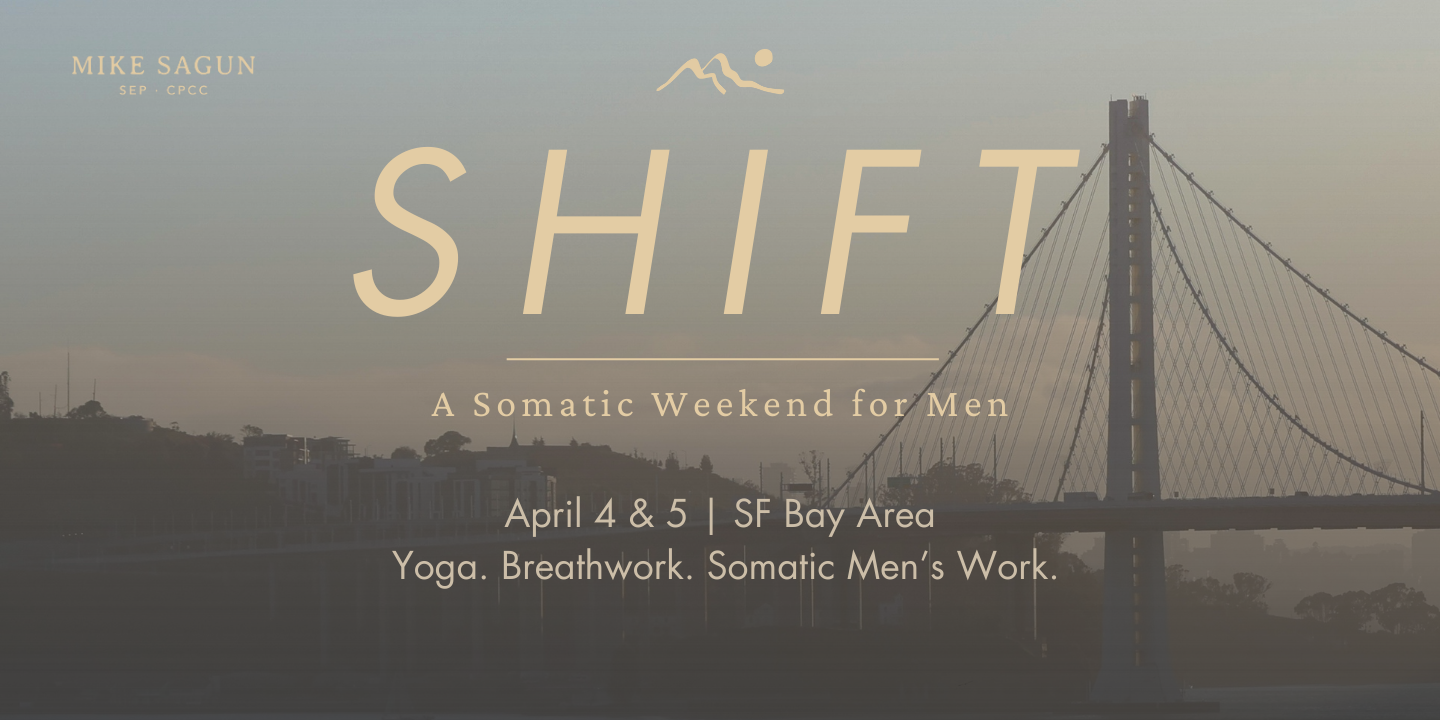
SHIFT is a small, in-person somatic weekend for men in the Bay Area who feel burned out, shut down, or disconnected from themselves.
This isn’t a workshop full of lectures. And it’s not a retreat built around pushing limits. The focus is on nervous system regulation, embodied awareness, and creating the conditions for real capacity to return.
Men come to SHIFT because they’re tired of managing symptoms and want to feel more like themselves again. The weekend is experiential, grounded, and paced to support safety rather than overwhelm.
If you’re curious, you’re invited to learn more and see if it feels like a fit for where you are right now.